
 Written by Yasmin · 3 min read
Fascia is a fine network of connective tissue that runs through your entire body, wrapping and connecting muscles, organs, skin and nerves. Your face included. Because everything is linked through this web, tension in your jaw can be connected to your neck, your forehead and even the way you breathe.
Let me take you along into why I find fascia so, well, fascia-nating. 😉
What is fascia, exactly?
You may have heard of it, or maybe not at all. Picture a very fine web, a bit like the thin skin around a segment of orange. That web runs everywhere. It wraps every muscle, supports your organs and lies as a layer beneath your skin.
Fascia gives shape and support, and lets tissues glide smoothly past each other. When that works well, you don't notice it. But fascia can also tighten, for example through long-term tension, a fixed posture or too little movement. An area then feels stiffer and moves less freely.
Why is your jaw never just your jaw?
This is the part I love. Our body isn't made of separate pieces. Everything is connected.
Your jaw muscles sit in the same web as your temples, your neck and the muscles around your mouth. If your neck holds a lot of tension, your jaw may start to compensate. If you clench a lot, that can travel up into your forehead or around your eyes.
That's why I never only work where you feel the tension. I look at the connections around it. Fascia. Neck. Jaw. Face. Breath. Everything talks to everything.
What does fascia have to do with stress?
We move, breathe, talk, laugh and chew. But we also experience. Your nervous system is in constant contact with your body: with touch, tension, relaxation and everything you feel.
We can hold tension without being aware of it. In our jaw. Around our eyes. In our forehead. Around our mouth. What we go through can show up in how we carry ourselves and where we hold on.
That's not a vague idea. Think of your shoulders creeping up on a busy day, or your jaw tightening during a difficult conversation. Your body responds, and sometimes it forgets to let go again.
How do you work with fascia in the face?
That's why working with fascia doesn't feel to me like doing something to a body. It's listening.
First feel. Then listen. And follow what shows up. No forcing. No pushing through resistance. Instead, slowing down, giving space and noticing what unfolds.
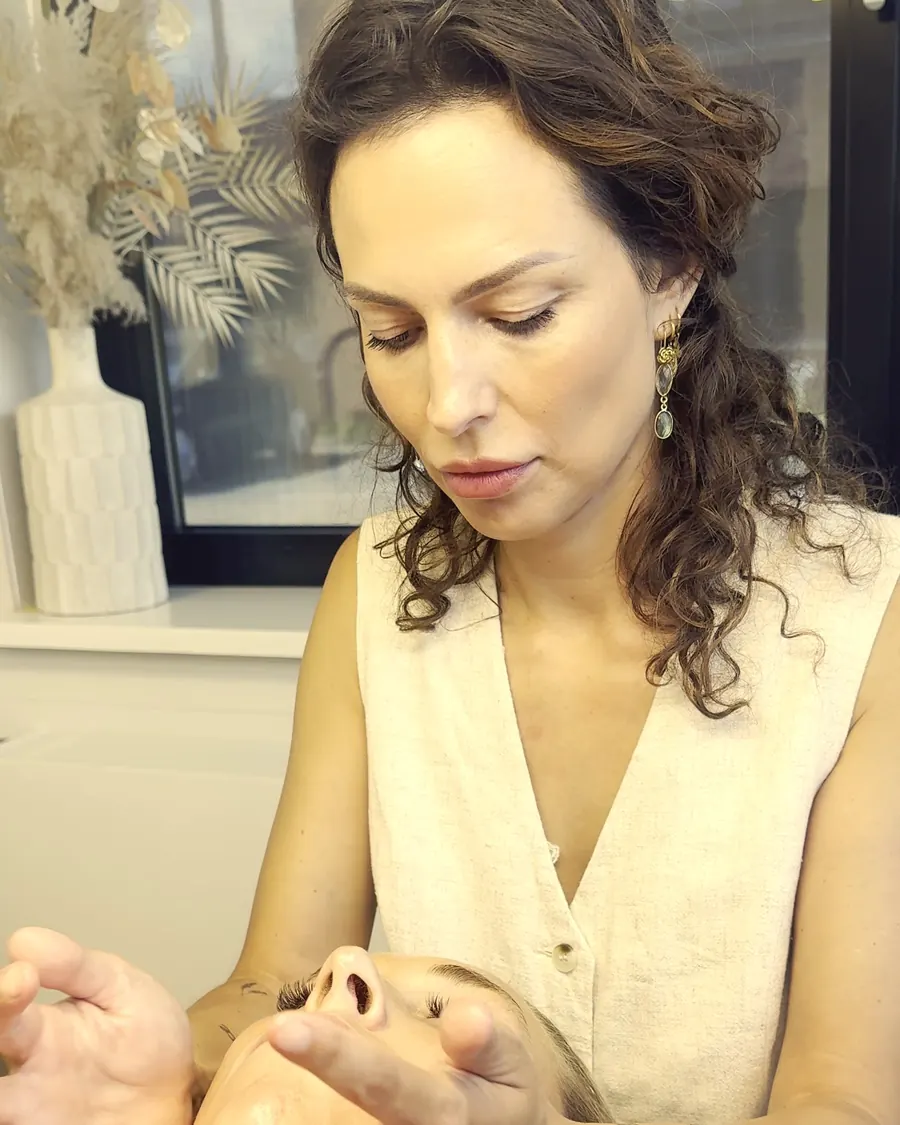
In practice, that means slow, deep touch. Sometimes I stay in one spot for a while, wait for the tissue to soften, and then move on. Many people find this deeply calming, and notice afterwards that their face feels lighter and more open.
Because maybe your body doesn't always need correcting. Maybe sometimes it just needs attention, space and time to soften again.
Body. Nervous system. Feeling. They are closer together than we often think.
Does it sound as fascinating to you as it does to me? Come and feel it. Fascia work is part of every treatment in The Beyond Method, from Presence to Beyond. Boek je behandeling and I'll guide you with full attention and presence. ✨